GURUVAYUR TEMPLE – WHERE HOURS OF WAITING MELT AWAY IN DIVINE ENERGY
There is a Malayalam saying which translates into English as, “The jasmine in your own garden has no fragrance,” meaning people often fail to appreciate the good things that are closest to them. At times, it feels almost true.
One of Kerala’s famous tourist attractions, the Krishnapuram Palace, was located barely 50 metres from my home, yet I never really thought of visiting it. The palace, built in the 18th century, is known for having one of the largest mural paintings in Kerala.
The reason I mention this here is because, despite Kerala being home to many famous temples that I have visited numerous times — and despite already writing stories about several temples from North India — I never really thought of writing about the temples of my own homeland. So here is my first attempt — about one of Kerala’s most sacred and well-known temples dedicated to Lord Krishna, namely the Guruvayur Temple.
LEGEND OF GURUVAYUR TEMPLE
Situated in the Thrissur district, the temple is located in the small town of Guruvayur, around 25 kilometres from Thrissur city itself. It is in fact a major destination for pilgrims from across the country. The deity worshipped here, Guruvayurappan, is considered one of the most sacred forms of Lord Krishna. The temple is believed to be more than 5,000 years old and is often regarded as Bhuloka Vaikundam — the holy abode of Lord Vishnu on Earth.
According to legend, the idol worshipped here was once worshipped by Lord Krishna himself in Dwarka. When Dwarka was submerged into the sea, Lord Brahma and Vayu, the God of Wind, rescued the idol and installed it at this place. Symbolically, the place came to be known as Guruvayur — derived from “Guru” and “Vayu.”
The importance and reverence that people of Kerala held towards this temple was so immense that even a railway line and station were established in this small temple town mainly for the convenience of pilgrims. It is often said that the timings of certain trains were arranged so that pilgrims could arrive around midnight and attend the temple’s early morning darshan.
A TEMPLE TOWN THAT NEVER FALLS ASLEEP
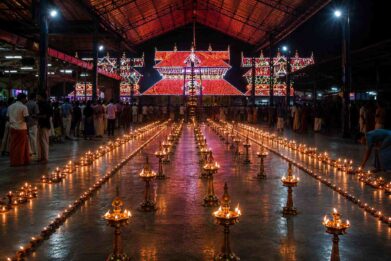
The small temple city never looks asleep and remains alive even around midnight, with pilgrims continuously arriving while small restaurants and shops remain open.
The moment anyone enters the streets leading to the temple from any of the four directions, it feels like entering into the sacred world of Lord Guruvayurappan. Perhaps the surroundings feel as though only the holy presence exists there, while everything else seems to belong to another world.
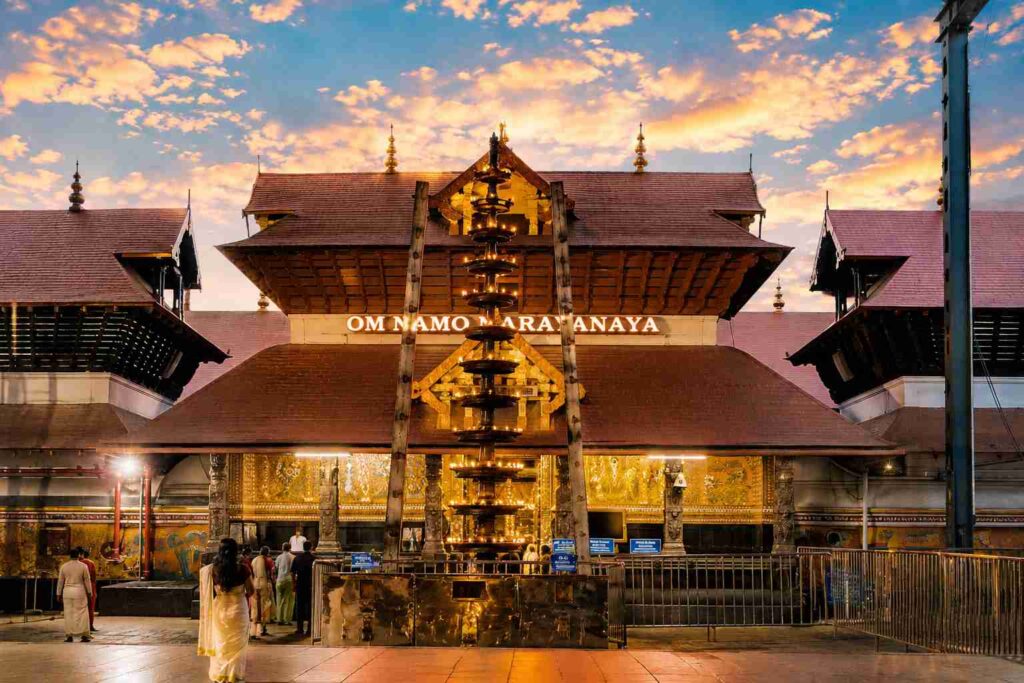
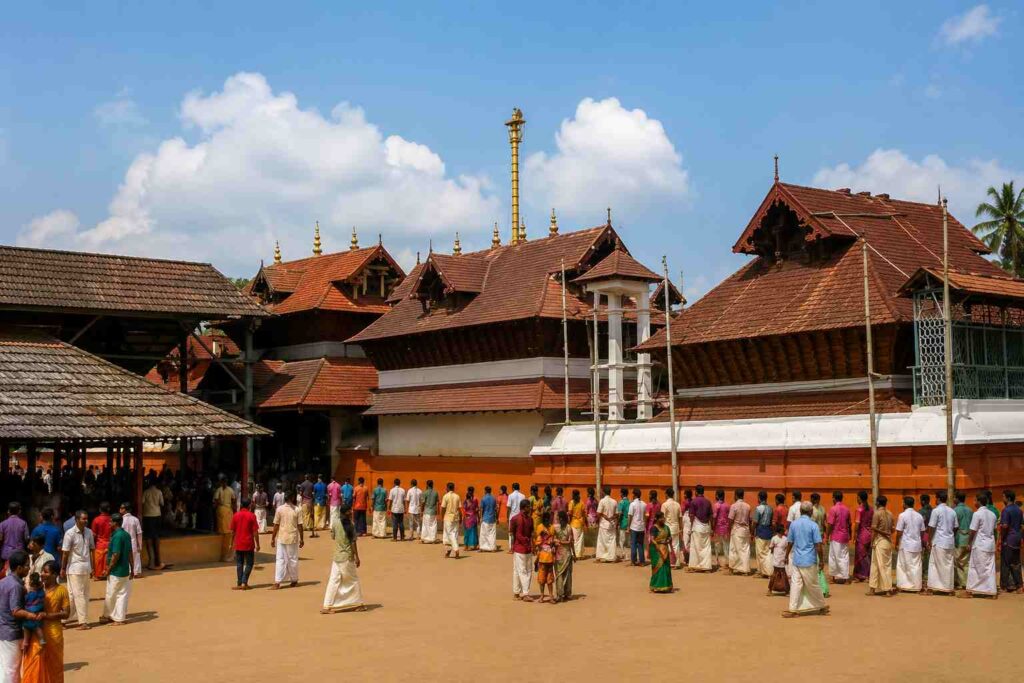
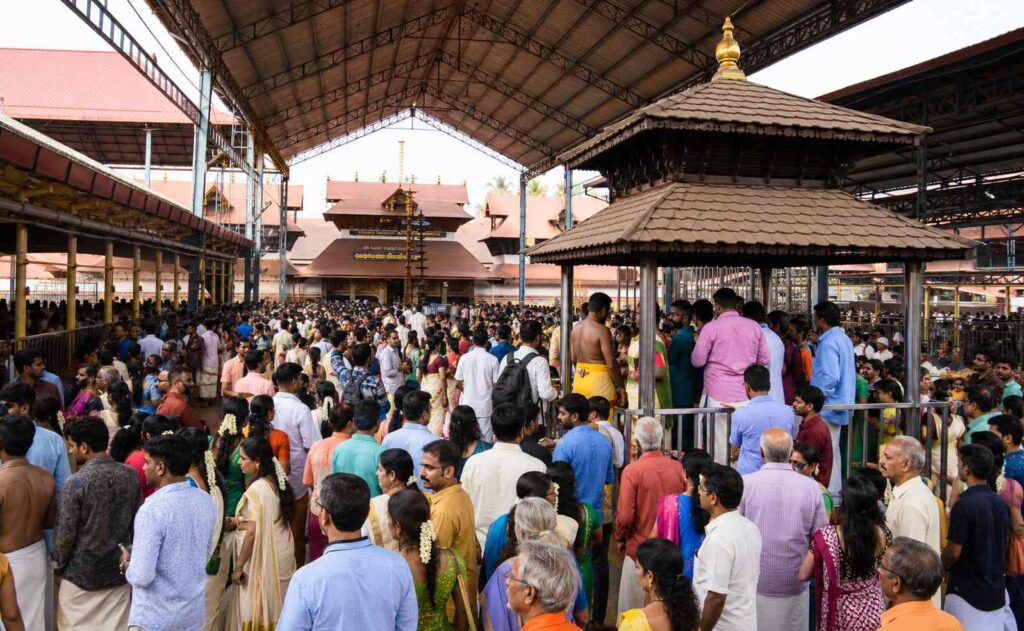
The last time I visited this temple, the line for darshan was so long that, if stretched in a straight line, it might have extended for a few kilometres. It started from the first section where steel pipe barricades were arranged in front of the temple. After that, it continued through the other side towards the southern streets, all the way up to the main road. There were also three to four separate rows arranged for the pilgrims.
GURUVAYUR TEMPLE AND THE DREAM OF AN ARANGETTAM
On the right side of the temple’s main entrance stands the famous Melpathur Auditorium, where cultural arts, spiritual discourses, and various programs take place almost every day from morning till night. It is also one of Kerala’s important venues for students and performers of traditional art forms, especially Bharatanatyam and Mohiniyattam.
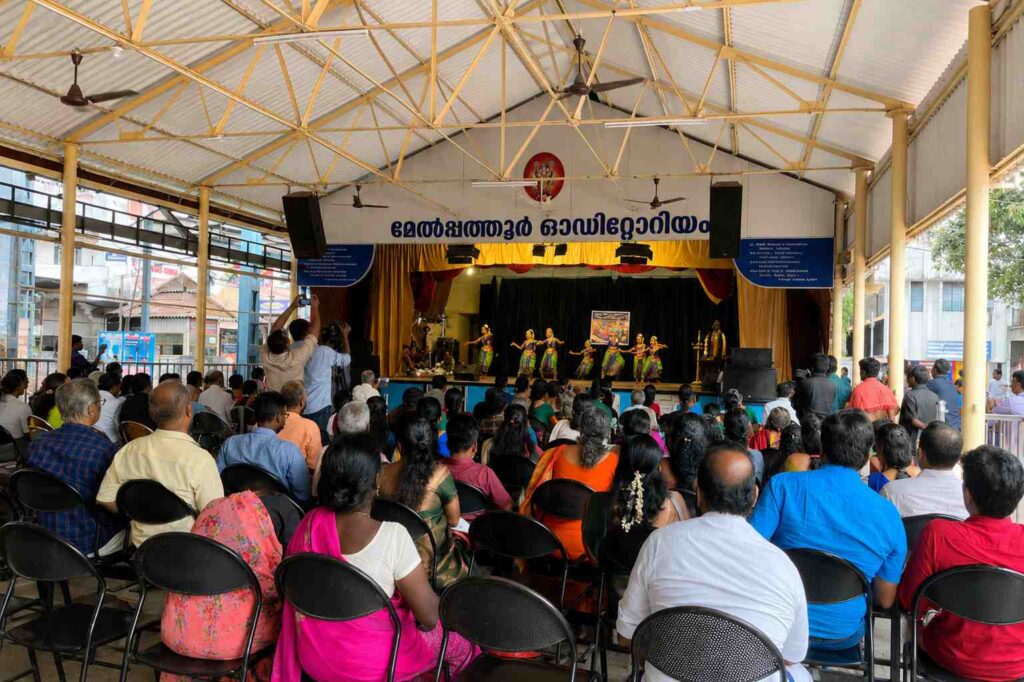
For many students and their families, it is a dream to conduct their first public performance — known as Arangettam — in this auditorium, seeking the blessings of Guruvayoorappan to continue their artistic journey throughout life..
Another important and perhaps one of the most sacred aspects associated with this temple is conducting Hindu marriage ceremonies in front of the main entrance. Mandapams for the ceremonies are arranged on the left side of the temple as well. During peak bookings 5-6 mandapams would be arranged in a line.
GURUVAYUR TEMPLE – WHERE TYING THE KNOT HAPPENS IN A FLASH
During the most auspicious days and timings for marriage, decided according to astrological calculations, the rush for bookings can rise to hundreds. There were even instances when, amidst the overwhelming rush of couples, parents, and relatives, brides themselves were mistakenly exchanged in the confusion. At times, couples and their families barely get a few seconds — just enough time to tie the knot and exchange garlands before making way for the next couple. Even those who wish to marry here without strictly following the muhurtham can do so, as the temple authorities allow marriages whenever the temple remains open.
GURUVAYOOR TEMPLE – WHERE THE DRESS CODE SOOTHES THE EYES AND SOUL
As per temple customs, gents and boys are not allowed to wear shirts and trousers inside the temple premises. Instead, they are expected to wear traditional dhoti or mundu, usually with a cloth covering the shoulders, known as neryathu or melmundu.
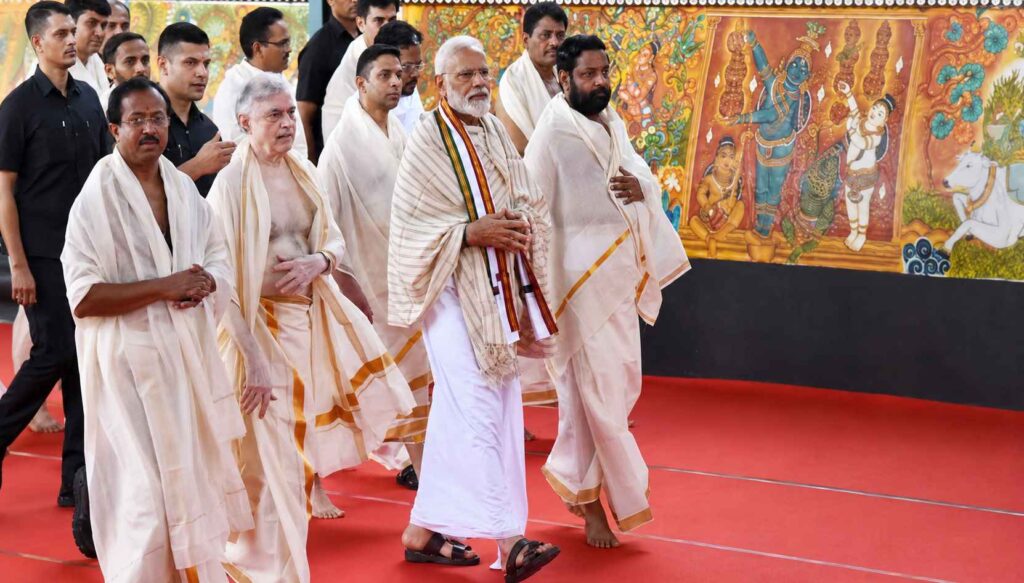
Ladies of all age groups could mostly be seen wearing traditional Kerala sarees or set mundu with matching blouses. Nowadays, many of them come in special designs rather than the normal traditional style. Even prints of Lord Krishna and peacock-feather-like adornments in off-white colour could be seen in sarees here and there and little kids too comes in the same colur designed frocks. These traditional attire among the pilgrims themselves creates a soothing sense of uniformity.
INSIDE THE QUEUE AT MIDNIGHT
One of the most important poojas for pilgrims, especially for those who arrive in the town hours in advance or spend long hours waiting in lines, is the Nirmalya Darshanam. It is the very first pooja of the day, conducted at around 3.30 AM. The ritual symbolically involves waking up the deity, bathing the idol, and adorning it. The pooja is performed following tantric rituals and traditions.
Like many families in Kerala, my family too had visited this temple numerous times over the years. On several occasions, we had attended the Nirmalya Darshanam itself, waking up as early as midnight so as to stand among the first in the line. Even then, there were times when we had to wait for hours — sometimes four to five hours, and once even close to twelve hours during a special festive occasion.
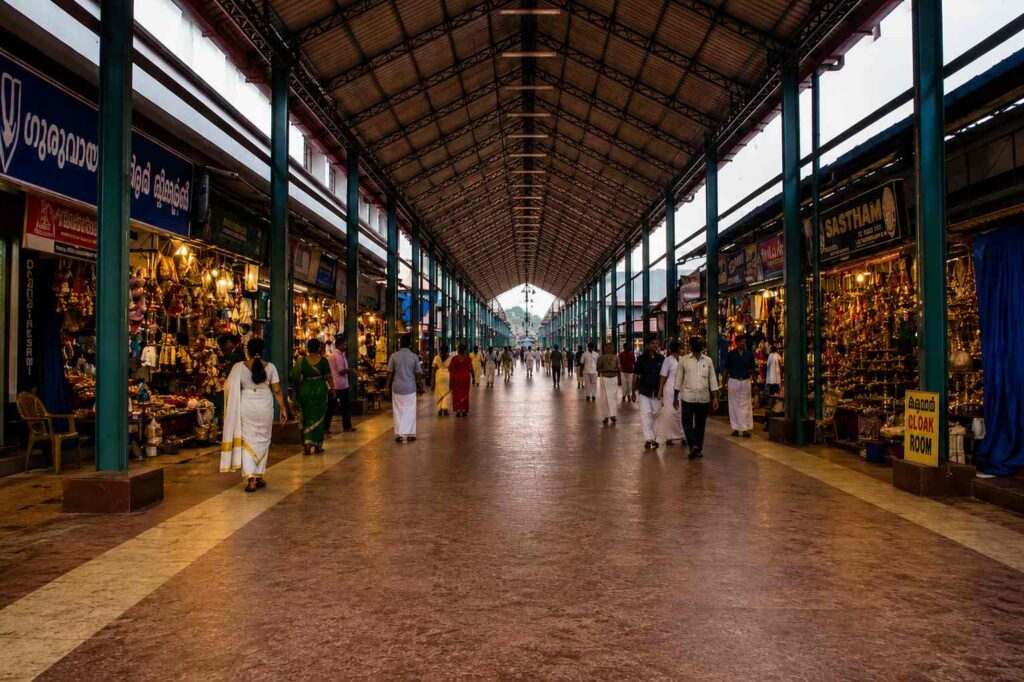
The east side, where the temple’s main entrance is located, is where the long lines for darshan usually begin. It is on the left-hand side of the temple where several lines have been arranged with steel barricades to manage the crowd. It was here that I first noticed the huge fans with blades, nearly four to five metres in size. Later, I happened to see similar ones inside the metro corridors in Delhi as well.
HOURS IN THE QUEUE, LOST IN SACRED CALMNESS
But even through all those hours, hardly anyone seemed exhausted or impatient. Instead, everyone appeared immersed in the calmness that the temple premises offered. Many elderly people, especially women, could often be seen carrying small prayer books — usually the Vishnu Sahasranamam, containing the thousand names/slokas of Lord Vishnu, or other devotional recitation books — reading and chanting while waiting in the line.
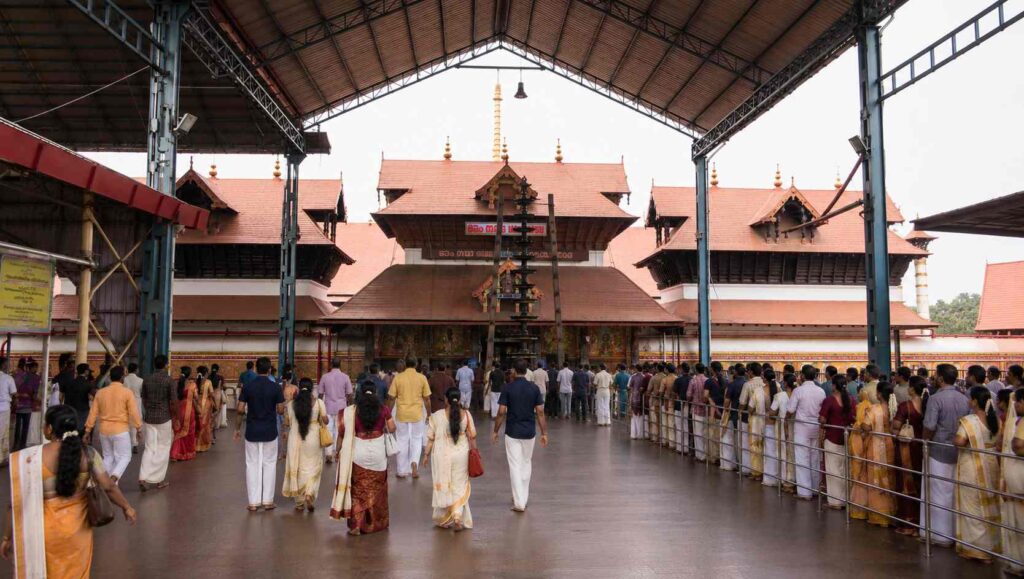
Yet the most fulfilling wait is for the morning Nirmalya Darshanam. Joining the pilgrims waiting in front of the temple while the world around still sleeps peacefully feels like standing within a sacred aura spread by Lord Guruvayurappan himself. Looking at the traditional temple structure, with its sloping roof visible even from outside, further adds to the serene surroundings. It fills the pilgrims waiting in the line with a quiet anticipation, hoping that within a few moments they will finally have the glimpse of Lord Guruvayurappan.
The soft, melodious, and divine sound of the conch horn breaking the silence of the wee hours brings a pure ecstatic joy to those waiting in the line. And soon, as the first bell rings for opening the Sreekovil, the line slowly begins to move through the designated pathways arranged for darshan. The silence, devotion, the odd timing amidst the darkness of night, and the slow chants of kirtans create a feeling of being in a world where the everyday struggles of life feel far away..
INSIDE THE SREEKOVIL – ATTAINING A DIVINE ALIGNMENT
After waiting in the line for hours, we finally entered through the main gate with folded hands, trying to catch a glimpse of the deity before moving towards the left side, where small steel staircases had been arranged to facilitate the movement of other pilgrims and temple staff around the Sreekovil.
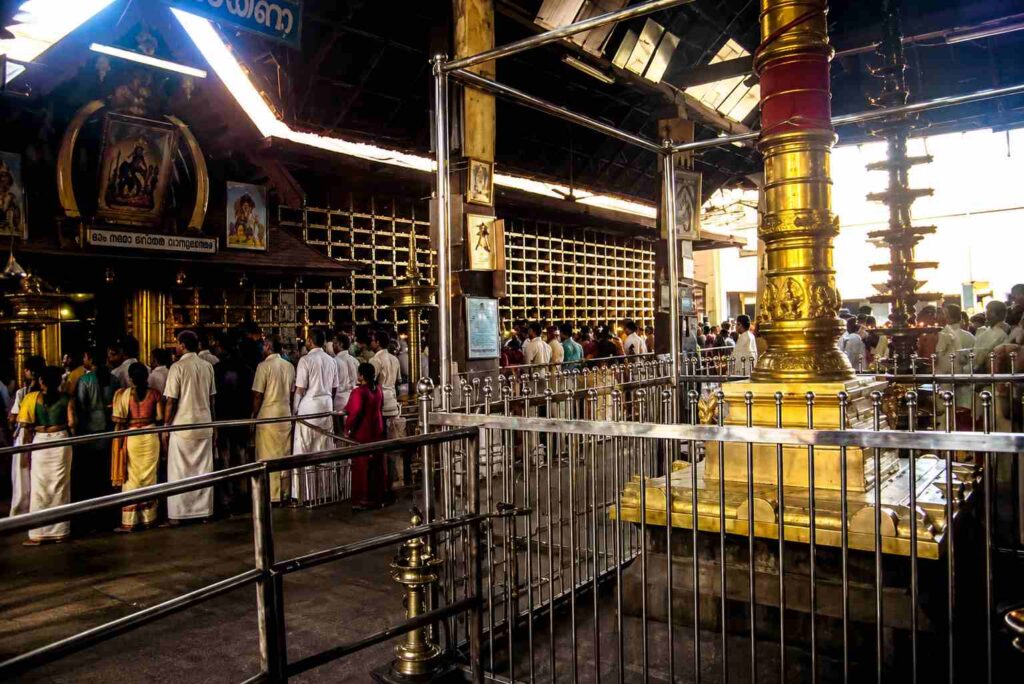
Though there was a sense of rush once we were inside the Sreekovil due to the urgency for darshan, the atmosphere inside the temple premises and around the Sreekovil made those few moments feel deeply blessed and auspicious.
At last, as we touched the bottom of the door frame as a gesture of entering into God’s abode, worshipped by millions around the world as the universal God, the body and soul felt aligned with the holy presence of Lord Guruvayurappan.
THE “KANNANE KANDA” MOMENT – SEEING GURUVAYURAPPAN AT LAST
The line finally moved slowly, and eventually it was my turn to stand in front of Lord Guruvayurappan while the priests performed the rituals of Nirmalya Darshanam. Normally, in most temples, prayers before the deity are offered with folded hands and closed eyes. But here, one can hardly do that, because the glimpse itself feels too precious — perhaps the very purpose of the visit itself, as Keralites often say, “Kannane kaanan pokunnu,” meaning going to see Guruvayurappan — after travelling, waking up early, and spending hours in the line.
Most of the time, luck too seemed to be in my favour, as I usually got enough time for the glimpse and to offer my prayers before the temple authorities gently asked the pilgrims to move forward. And once we moved away after the darshan, it became almost impossible to explain the feeling in just a few words. It brought a sense of contentment, fulfilment, and satisfaction to both body and soul.
AFTER DARSHAN – THE CALM BEYOND THE WAIT
There are no strict restrictions on staying for some time around the Sreekovil premises after the darshan. Most pilgrims can be seen quietly standing, sitting on the steps, or resting along the platform on the left side, where the Devaswom office for booking poojas is located. It is also the place where prasadam such as sandal paste and kumkum, is distributed to those who complete the darshan after the customary pradakshinam around the Sreekovil.
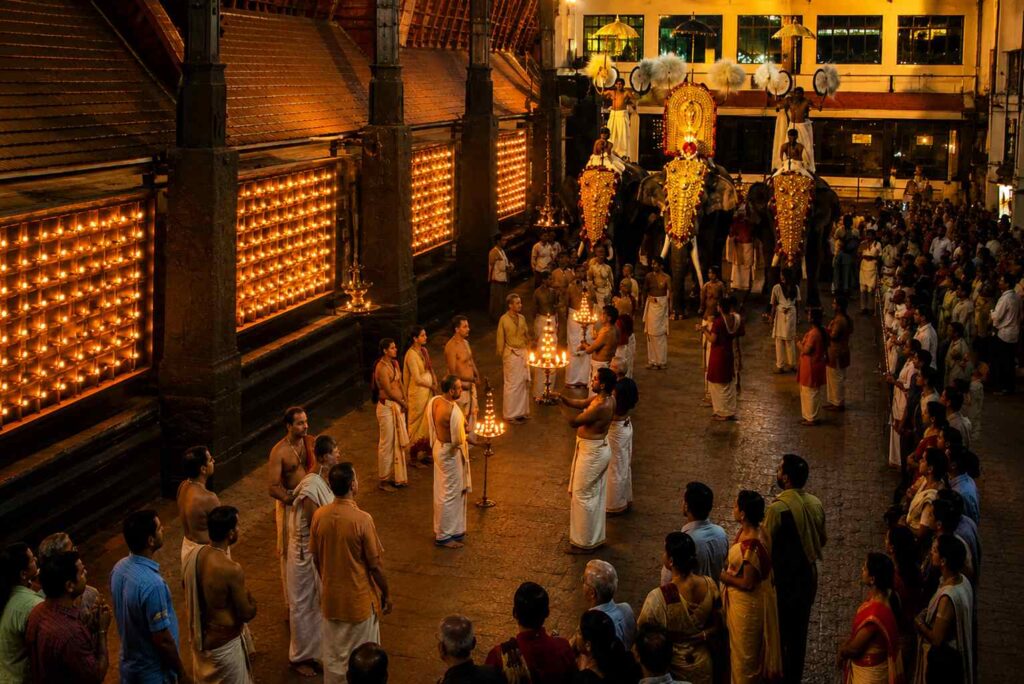
A few people can be seen doing Sayana Pradakshinam, rolling their bodies around the temple as an offering and act of devotion. At the same time, ladies can be seen walking with their feet touching one another in every step as part of their prayers; it is usually considered their equivalent of Sayana Pradakshinam. Many others remain immersed in the serene surroundings inside the Sreekovil premises.
And as usual, I too sat on the steps after offering customary poojas in the Devaswom office for my dear and near ones. Inside the same temple complex, there were also arrangements for another important ritual among pilgrims, namely Thulabharam — a form of offering in which the devotee is weighed against items like bananas, sugar, jaggery, and other offerings. Though this ritual is mostly performed for newborn babies, grown-ups too can often be seen taking part in it. The offered items are later donated to the deity as part of the prayers. There is also a hall where annadanam, or free food for devotees, is served on most days.
THE SACRED TEMPLE POND BESIDE THE SREEKOVIL
Another sight that quietly adds to the divine atmosphere of the temple is the sacred pond located beside the temple premises. Even amidst the movement of thousands of pilgrims, the pond known as Rudratheertham somehow carries a strange stillness of its own.
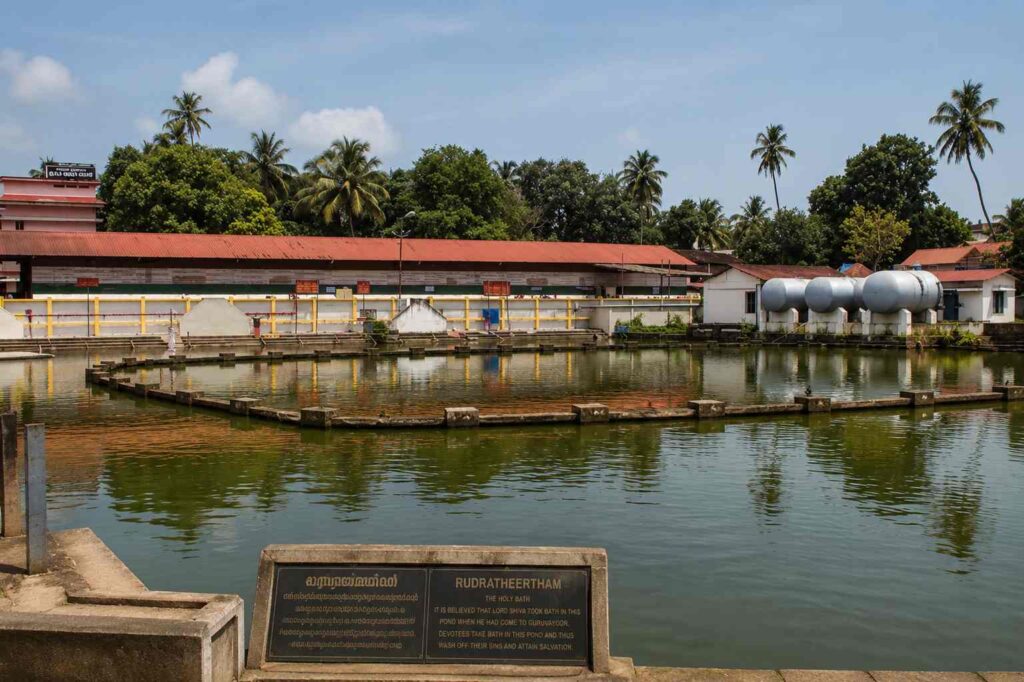
The reflection of the traditional sloping temple structures, lamps, and moving devotees upon the calm water often creates a soothing visual experience, especially during the early morning hours before sunrise. At times, the water appears almost motionless, as though silently preserving centuries of prayers, devotion, and memories within itself.
Many devotees can be seen standing near the pond for a few moments before or after darshan, simply absorbing the peaceful surroundings. In a temple filled with movement, chants, bells, and long waiting lines, the pond unexpectedly becomes one of the calmest corners of the entire spiritual experience.
Close to the pond, there is also a large annadanam hall outside the temple premises, where hundreds of devotees gather for prasada oottu on most days.
A MANDATORY VISIT TO MAMMIYOOR – WHERE LORD SHIVA RESIDES WITH HIS DIVINE FAMILY
Finally, it becomes time to leave the temple after all these experiences, and for most pilgrims, the next destination usually becomes one of the nearby temples, namely Mammiyoor Temple, located around one kilometre away. There is a belief and legend that a visit to Guruvayur Temple remains incomplete without visiting this temple, dedicated to Lord Shiva.
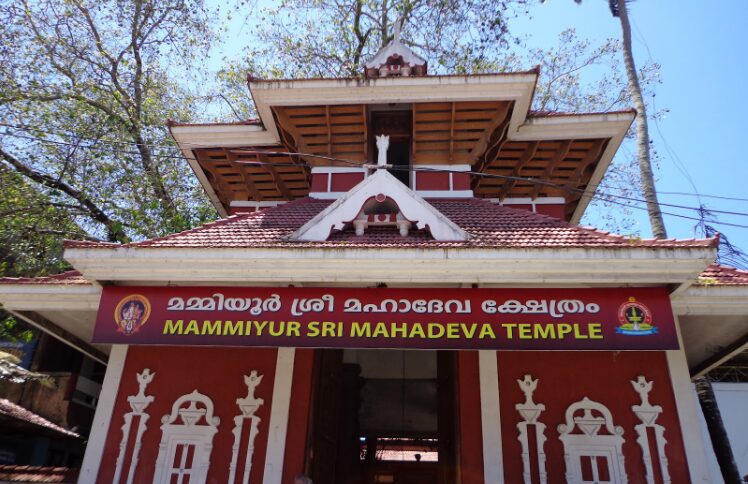
According to the stories associated with the temple, the place where the Guruvayur Temple now stands originally belonged to Lord Shiva. When the idol of Lord Krishna was brought there, Lord Shiva voluntarily moved to Mammiyoor. Today, the deity at Mammiyoor is worshipped along with the entire divine family, including Goddess Parvathi, Lord Ganesha, and Lord Murugan, in the form of Uma Maheshwara.
BACK TO NORMAL LIFE – STARTING WITH MASALA DOSA AND COFFEE
The immediate destination after completing the customary Mammiyoor visit was usually one of the nearby restaurants with plenty of vegetarian hotels are lined across the streets for food, tea, or coffee to recover from the tiredness. Normally, one would feel exhausted after waking up at 1 AM and standing in lines for hours, but somehow the visit to this famous temple only seemed to increase the energy within.
FOOTNOTE: A RARE SIGHT OF A TRADITIONAL KERALA PALACE AND 50 MAJESTIC TUSKERS
After breakfast and coffee, we drove another three kilometres and reached one of the rare places where we could see around fifty elephants along with a traditional Kerala palace setting. The place was Punnathur Kotta Elephant Sanctuary, home to male tuskers spread across nearly eleven acres of charming greenery surrounding an old palace.
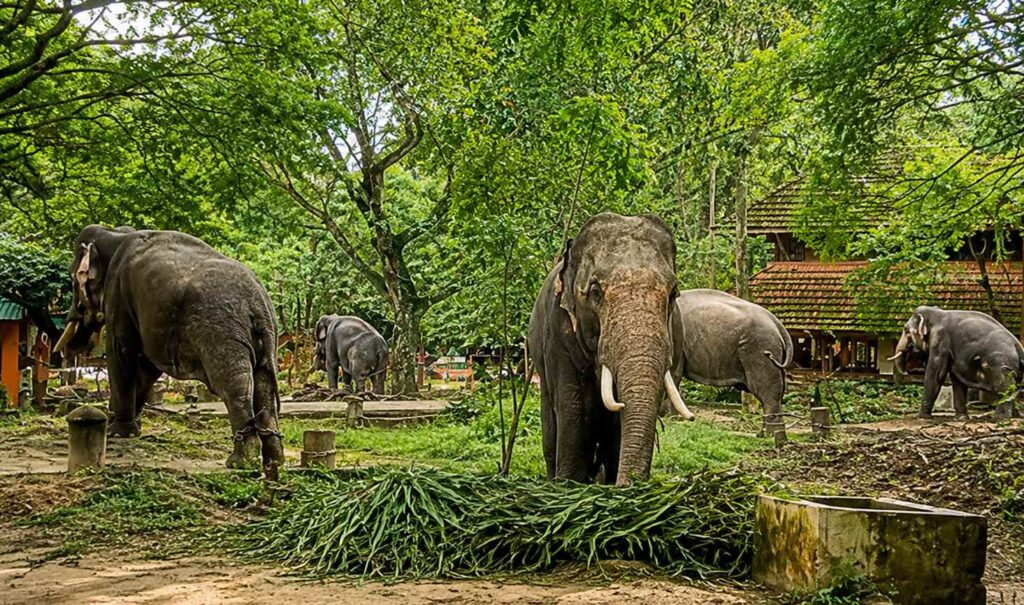
The structure was once the palace of the Punnathur Raja, built in the traditional Kerala style with a central courtyard and rooms arranged in a square layout, commonly known as a Nalukettu. As we walked along the designated circular pathway, elephants of varying sizes tied near gigantic trees could be seen everywhere. Many of them almost looked proud of their own majestic presence.
The time was still early — not even the usual waking-up time on normal days. Yet we had already completed one of those moments we had been longing for over months, though it was neither our first visit nor would it turn out to be the last.
The world was slowly lighting up with the sunrise, and the streets were beginning to return to another chaotic day of life in Kerala, while while we were already on our way back home after completing one of the most auspicious darshans that an ordinary Keralite wishes for.
Would you like to explore the birthplace of Lord Krishna? Click here
Click here for more details on the temple
CREDIT: Except for one, all the photographs in this post belong to their respective original photographers. Though I am someone who loves capturing anything that touches the eye and heart — and despite having visited this temple numerous times — I possess only a single photograph from here. One reason is the restriction on mobile phones inside the temple, while the other is my own hesitation towards photographing within temple premises, choosing instead to place devotion and divinity above the urge to capture moments.
FOR INFORMATION
HOW TO REACH GURUVAYUR TEMPLE
Guruvayur Temple is located in the Thrissur district of Kerala, around 25 kilometres from Thrissur city. The nearest railway station is Guruvayur Railway Station itself, situated hardly a kilometre away from the temple. Thrissur Railway Station, one of Kerala’s major rail junctions, is another convenient option with frequent bus and taxi services to Guruvayur. The nearest airport is Cochin International Airport, located around 80 kilometres away.
Best Darshan Timings
Among the most spiritually significant darshans is the famous Nirmalya Darshanam conducted around 3.30 AM, when pilgrims gather even from midnight onwards for the early morning glimpse of Lord Guruvayurappan. Early mornings and weekdays are usually comparatively less crowded, while weekends, holidays, and auspicious occasions witness extremely heavy rush.
Dress Code
The temple strictly follows traditional Kerala temple customs. Gents and boys are expected to wear dhoti or mundu without shirts inside the temple premises, while ladies usually wear sarees, set mundu, salwar kameez, or other traditional attire.
Photography Rules
Photography and mobile phones are strictly prohibited inside the temple premises. Cameras, phones, and electronic items must usually be deposited at designated counters before entering for darshan.
Nearby Attractions
One of the most important nearby temples is Mammiyoor Temple, believed to be an essential visit after Guruvayur darshan. Another famous attraction nearby is Punnathur Kotta Elephant Sanctuary, home to dozens of temple elephants amidst a traditional Kerala palace setting.