This is a continuation of the journey to Badrinath Temple, onward to Mana, India’s last village, and finally to Auli, known as the “Switzerland of India” for its snow-covered slopes. Click here to read Part One.
The crazy U-turns and fortress-like mountains near to Badrinath Temple
Close to the temple, a series of U-turns with short legs will remain in the heart forever because of its steepness in the turns, which are close to each other and finally reached the temple from Joshimath, eventually to a plain ground, taking more than three hours for 44 km without any halt in between, as it decided selfies and photoshoots are only on return.
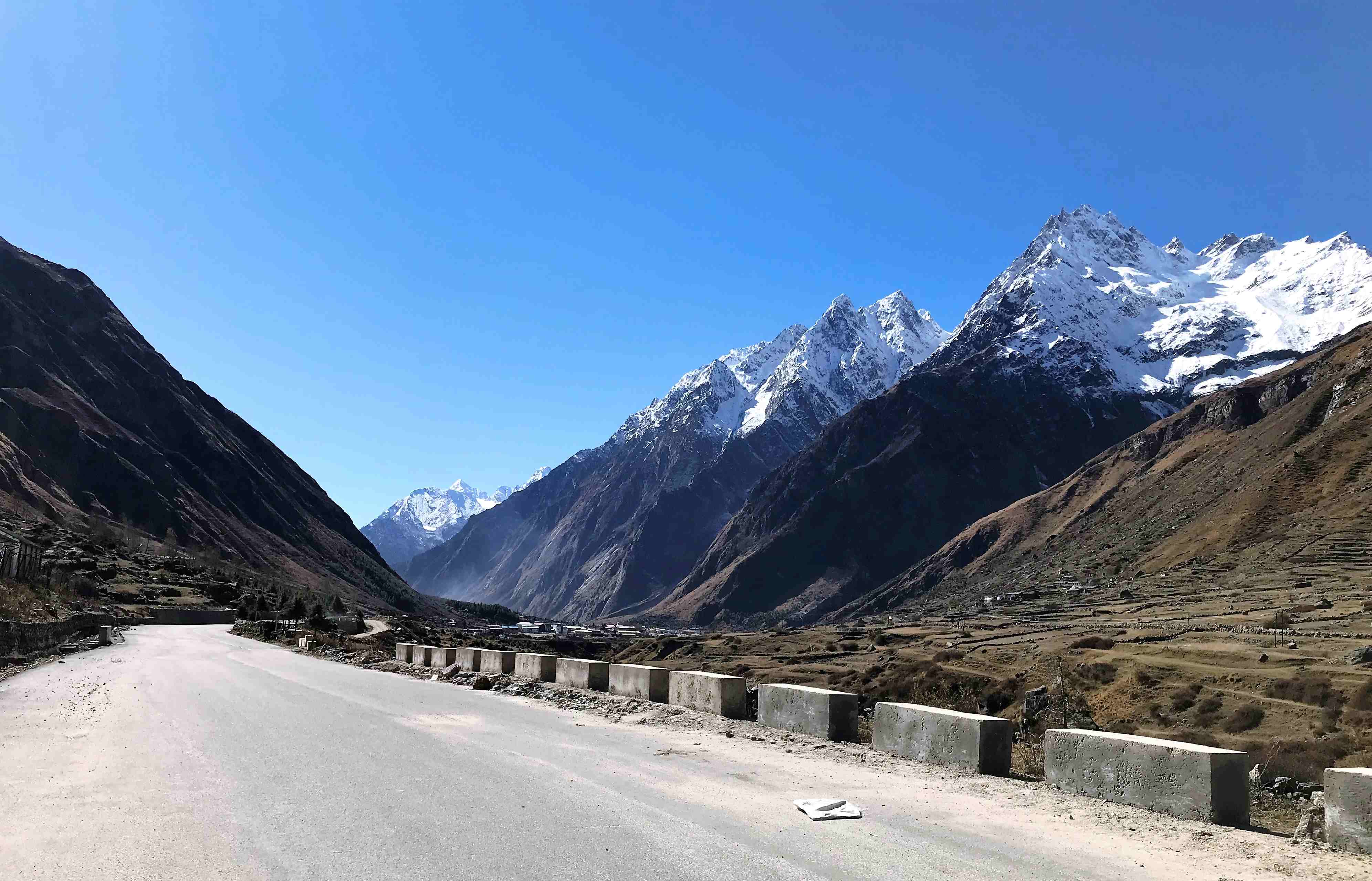
The place looked like only the Badrinath temple, a river, and mountains are in existence and nothing else matters. It was so peaceful with the sound of the flow of water of the River Alakananda breaking the divine silence of the atmosphere in between. The mountain range known as Nara and Narayan from mythology was standing tall as a fortress to the temple, with one in the Golden in colour saw yesterday on the way from Rishikesh to Joshimath as a leader in the pack and another mountain peak, namely Neelkantha, was seen opposite.

Only a few steps of walking were required to reach the temple, where the river was flowing in front of the small temple complex with a small bridge to cross. As expected, the river looked much beautiful and divine than the earlier avatar seen during the journey while looking from the bridge where the temple was barely 10 to 20 steps away.
Why River Ganga known as the Alakananda in Badrinath?
I was curious to know why the same river is there all the way from Haridwar and Rishikesh to Badrinath, but why it is called Ganga in Haridwar and Alakananda in Badrinath, especially since there was a huge difference in the way the rivers at both locations are seen. In Haridwar, the river was turbulent, furious, and flowing so angrily, while at the feet of the Badrinath temple, it looks to be at peace, beautiful and flows like a melody.

Curiosity took over shyness in me, and I spoke to a Yogi who was standing at the bridge looking at the river. He said the sacred river of Ganga or Ganges flows almost 2500 kilometres from its origin in a Himalayan glacier above the location of the Badrinath temple till it reaches the sea through 11 Indian states, and the name Alakananda is its branch at the Badrinath temple location. I was happy to have some great pieces of information from him on divine rivers, not only about the Ganga, but Yamuna, the Bhagirathi, etc.
The blessed Moment – @ the Feet of Lord Badri
As I approached the shrine, it felt like one of the most blessed moments for being in a place where only a selected few are destined to visit due to its particular location, hard part of journey that to be covered along with the fact that the temple remains open only for 6 months of a year and that thought filled the heart with a feeling that is hard to put on the paper.

Not much rush was inside as I thought, and a handful of people in front of the temple inside the tiny complex were seen enjoying the special place with photoshoots, selfies and enjoying the whole scenery after the main purpose of darshan and blessings received from Lord Badri. The temple was decorated with a lot of flower garlands. Soon I was able to enter, where Lord Badri was situated at the top of India at an altitude of 3000 meters, inside a tiny complex, which would be covered under snow for half of the year
Due to fewer crowds, the priest allowed all those inside to take their own time to have darshan of Lord Badri and pray for enough time. A few of us inside spent as much time as we wanted for Darshan and prayers, and came out feeling satisfied with a fresh divine energy within inside of each of us, and the faces of others outside were saying the same thoughts. There were a few more small deities in the complex, and a customary darshan was made before coming out of the main mandap.

Tapta Kund – Nature’s Divine Wonder
Right below the temple, have a few steps to go down is the holy place Tapta kund, where one can have a bath in a spring of water, which is as hot as around 40 degrees Celsius. Imagine how nature has managed by its own to have water at 40 °C at that high altitude. Maybe the reason the place is believed to be the home of Agni.
Most of the people after the darshan were standing outside, enjoying the special place they were in. The whole area was anything but blissful and divine, which was covered by a whole lot of mountains that spread positive vibes, as it is connected to religiousness, it has possessed since the Dvapara yuga, with its gigantic postures and shapes. The presence of the river Alkananda flowing through the footsteps of Lord Badri, which looked like a decorated diamond ornament, and the temple building covered with flowers was only added to the charm and divinity of the place. A relatively early morning visual of this, with the cool breeze in this matchless beauty of nature in its pristine form, made it forget those tough moments and the difficulty of reaching this place.

Towards Mana – The Last Indian Village
Like every good moment has an end, it was time to leave the place of Lord Badri finally, and once near the car, it was a moment of delight to know that we were only 2.5 Kms away from the last known village of India, known as Mana.

Unlike other border areas of India, the presence of the military at this location was almost negligible, which made it feel like a peaceful area. As expected, the river too was on one side till the car parking area in front of the village, and it was seen coming from quite farther away as far as eye can reach.
Mana, the Indian village bordering with Tibetan side of China, is also a tourist place in the state of Uttarakhand, having some mythologically important locations too people can visit. The village is on the banks of the river Saraswathi, the biggest tributary of the river Ganga and is surrounded by the beautiful Himalayas. The entry to this village seemed to be a little crowded as many devotees who came to the Badrinath temple wouldn’t miss making a quick visit here.
Reliving the Last Journey of the Mahabharata at Mana Village
As per mythology based on the epic Mahabharata, it is believed that the Pandavas travelled through this place towards their final journey to Heaven after the Kurukshetra war. A huge rock formed as a bridge across the river Saraswathi is believed to have been created by Bheema, thus it is known as Bhima Pool. Legend is that Bheema placed the rock across the river to make way for Draupadi en route to heaven. Other attractions here are Vyas Gufa and Ganesh Gufa related to the life of Veda Vyas. Guides are available here who may take us to all these places, which may take around 2 hours, as only walking is the option.

The return trip seemed to be much easier and relaxed, while some stopovers for photographs revealed much better portraits of this marvellous place up close than what one sees from the car. The heavenly combination of the river and the great mountain Himalayas, mixed with the reflection of sunlight, provided some excellent views along the way. A few hours of the day that I spent in Badrinath and Mana were one of the precious moments in my life and I wish to be lucky enough to have one more visit in the future.
Tail End of the Badrinath Trip
The state of Uttarakhand looks like a blessed one for many reasons. For all the difficult and tough terrain the state has, but it looks like God has compensated for the same with some incredibly stunning places, with the presence of some amazing mountains around.

Auli – A Shift from Divinity to Romance
If Badrinath is one of the most sacred and divine locations that can be reached 44 km by road from Joshimath, then a slow-moving cable car ride of 4.1 km through a ropeway from the same place will get people to another beautiful place called Auli, which is a destination for honeymooners.
The 360-degree view from the cable car moving at a height of several meters above the ground between huge towers is beyond imagination for all. The green landscape of Auli below, the bird’s eye view of the Joshimath town with houses situated within some hiking distance between each other, the faraway locations of mountain ranges having roads in between some of them that look like does not have any particular direction, made everyone awestruck with these marvellous views.

But the most striking thing to everyone was something else little further away, standing tall with a height of over 25000 feet, spreading brightness around. It was the famous Nanda Devi hills, the second-highest mountain in India after Kanchenjunga, with 23rd place among the world’s highest mountains. In mythology, the two mountains side by side represent Goddess Nanda and Sunanda. At the peak of the noon time, with the sun already out despite the start of winter, the mountains look glowing and glorious with the bright sun rays falling over it.

The 22-minute drive in the cable car will end at Auli, like landing from the air, a wonderful destination as a tourist spot for couples and famous for its snowfall during winters. This place is surrounded by the beautiful mountain range of Nanda Devi, Mana Parvat, along with Deodar and Oak trees. Being in the slopes of the Himalaya, Auli is also famous as a winter destination for many for skiing and winter sports. It was only natural to carve out more time for being here again at the earliest vacation to experience more of Auli, or Uttarakhand as a whole.

That’s the summary of my trip to Badrinath. It was an unplanned one on a Diwali holiday, just before the start of winter, but it turned out to be one of the most blessed trips of my life — fully worth it for being in a temple that not many people could even dream of visiting, and for the tough part of the journey required to reach there.
Discover more from NOTES FROM THE ROAD
Subscribe to get the latest posts sent to your email.