
Childhood Fascination and Mythical Connection
While growing up in Kerala, the place Kashi (Varanasi) came across as a fascinating one — quite far away in a distant land, especially when listening to the stories from my grandmom. What I mostly heard was that as per Hindu mythology - Kashi, along the banks of the River Ganga belongs to Lord Shiva. It is also believed that one’s soul will attain Moksha if they are fortunate enough to have their last breath and cremation on the banks of the Ganga in Kashi.
The belief still holds strong that many people bring the ashes of their loved ones here to immerse in the river. Even a dip in the holy waters of the Ganga in Kashi is said to relieve one’s sins and purify the inner self.
A Malayalam novel titled Varanasi by a well-known writer, in which the story revolves around the city as it was many decades ago, gave me a more realistic picture of the place. These stories, the famous Shiva temple, the ghats along the river, the sacred dip, the Ganga Aarti, and the cremation ghats were all etched in my mind for years, making sure that Kashi — or Banaras or Varanasi — always stayed on my list of must-visit places.
The Shortest Trip – Like Instant Coffee
Unfortunately, this turned out to be the fastest trip I ever made — like an instant coffee. The only suitable train on the day I planned was the one passing through Mughal Sarai station, quite far from Varanasi Central and Kashi Railway Station, and in fact from the temple area itself. Add to that the usual “late” of Indian Railways, with a delay of almost 4–5 hours, which eventually led to the loss of a day from my plan. Finally, I had to cut short a few things on my ‘to-do’ list and limit my visit to a few famous temples and nearby ghats.
First Impressions of the Holy City
My first day started late in the afternoon. I decided to take a local bus ride from Mughal Sarai to Varanasi — around 23 km — to get a feel of an unknown place beyond its devotional side due to the presence of Lord Kashi Viswanath. One of the best ways to experience such a holy place, older than known history, is to go with an open mind and no fixed perceptions. But sadly, neither the journey nor the surroundings near Varanasi Junction evoked much enthusiasm as a tourist spot, except for a long bridge over the Ganga that looked special. People seemed busy with their daily routines, finishing off another day.
A Small Temple and a Roadside Delight
In a holy city like Varanasi, one doesn’t have to go far to find worthy places, especially temples. Very close to where I got down from the bus — hardly 50 meters — there was a Devi temple known as Sri Maa Kaliji Mandir. Though not famous, many locals returning from work still found time to stop for darshan before heading home. I too went inside, curious to see how a small, lesser-known temple in Kashi would be — and to offer my prayers.
By then, it was already time for some tea and snacks. Experiencing local flavours is always part of any trip, and outside the temple, there were plenty of options. Some local snacks with hot coffee from a five-stool roadside tea stall filled the stomach as if it were dinner from a five-star hotel.
The Hanuman Temple and the Double-Decker Bridge
A taxi ride back to the hotel was tempting, giving me a chance to see more of Varanasi and make quick stops at a couple of interesting places — a Hanuman temple and the double-decker bridge over the Ganga that I had noticed earlier while travelling by bus.
The Hanuman temple was a large and famous one, though I forgot its exact name. The location was close to the Banaras Hindu University. What made it even more interesting was that the locality itself was called Lanka, a name directly linked to the Ramayana and the stories of Lord Rama and Hanuman. As every temple offers some kind of comfort, this one was no different. Both the idols of Lord Rama and Hanuman were given equal importance, placed facing each other in a special arrangement.
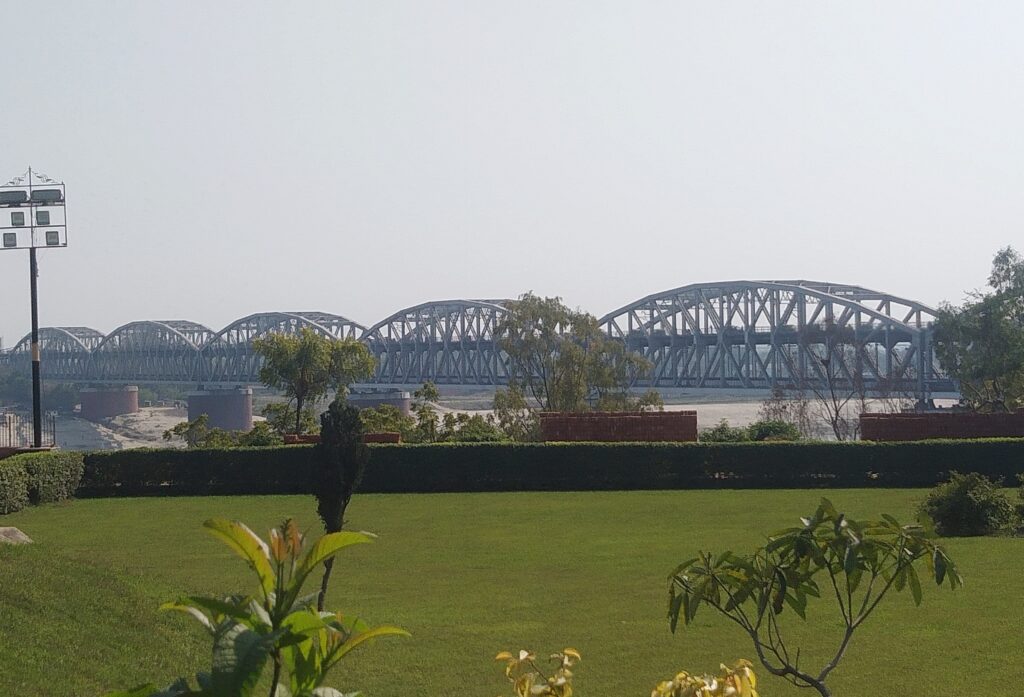
Staying a little away from Varanasi also gave me the chance to ride over a special bridge. This bridge crosses the River Ganga, and the experience of travelling on it was something unique—something I had never come across before. Since the area is very close to Rajghat, it is also known as the Rajghat Bridge.
On one side of the bridge lie the ghats and the famous Kashi Viswanath temple, offering a beautiful long-distance view that almost looks like a portrait of the temple city. The bridge is nearly a kilometre long and is designed in such a way that trains and buses can cross the river simultaneously—one on the upper deck and one on the lower deck.
We are all familiar with double-decker buses and trains, and even roads and rail lines running parallel, but a double-decker bridge carrying both one above the other was a rare sight. It was even more impressive considering it was built over a hundred years ago. Looking at the structure made me wonder about what kind of infrastructure would be required a century from now — perhaps roads built above roads to overcome congestion. A funny thought, yet not entirely impossible!
Ghats and Temples in Kashi
This place is better known as Kashi than Varanasi or Banaras, as the word Kashi sounds more divine and carries a direct connection to Lord Shiva. Vedic history also credits Shiva with the construction of this city. Considered the oldest civilized city, it remains one of the most fascinating places for historians across the world.
The famous American writer Mark Twain wrote about Varanasi: “Banaras is older than history, older than tradition, older even than legend, and looks twice as old as all of them put together.”
This city is also believed to have impressed Lord Shiva because of its immaculate design and careful planning, as per the myth. The point is not whether one chooses to believe this or not, but the very idea that discussions revolve around the planning, design, and construction of a city said to have been created millions of years ago sounds incredible.
The Sacred Darshan of Kashi Viswanath Temple
The disappointment from the previous day’s visit disappeared the moment I reached the temple and ghats in the morning. The first stop was the Kashi Viswanath Temple, located on the banks of the holy River Ganga. This is the most famous temple in the city, and records say it was built around 1490. It also houses one of the twelve Jyotirlingas—the supreme one among them—spread across different parts of India.
Jyotirlingas are believed to be manifestations of Lord Shiva, where He appeared as pillars of light to show the other two gods—Vishnu and Brahma—that there is no end to His universe. The spots where this divine light is said to have touched the earth are considered blessed with Shiva’s presence and are worshipped as Jyotirlingas.
Other prominent Jyotirlinga temples include Somnath in Gujarat, Mallikarjuna Swami in Andhra Pradesh, Rameshwaram in Tamil Nadu, and Kedarnath in Uttarakhand. With this in mind, it is easy to understand just how sacred this place and the Kashi Viswanath Temple are in relation to Lord Shiva.
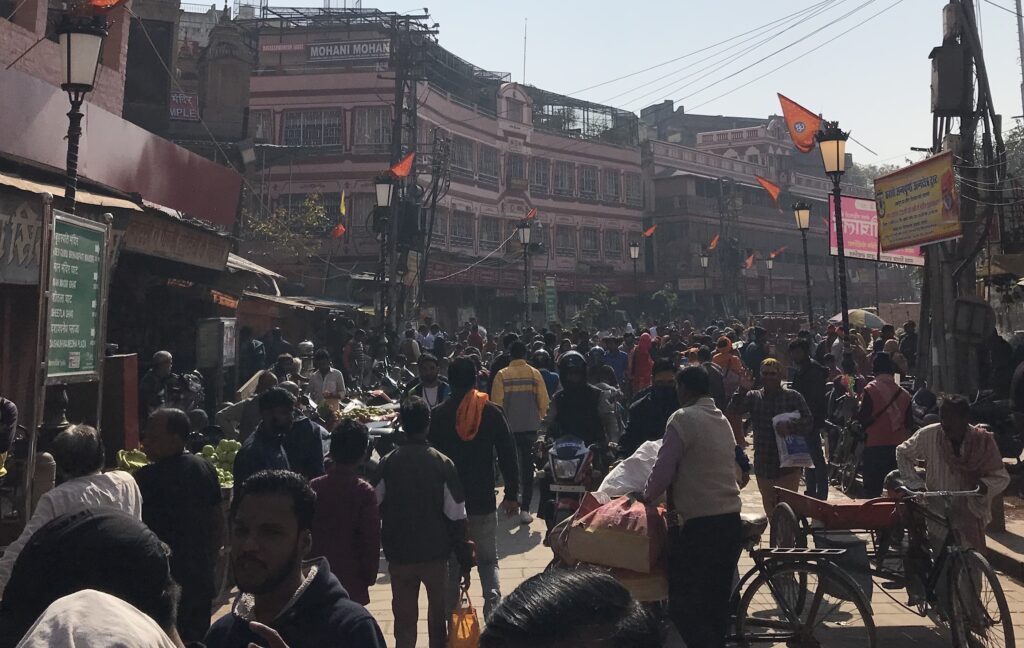
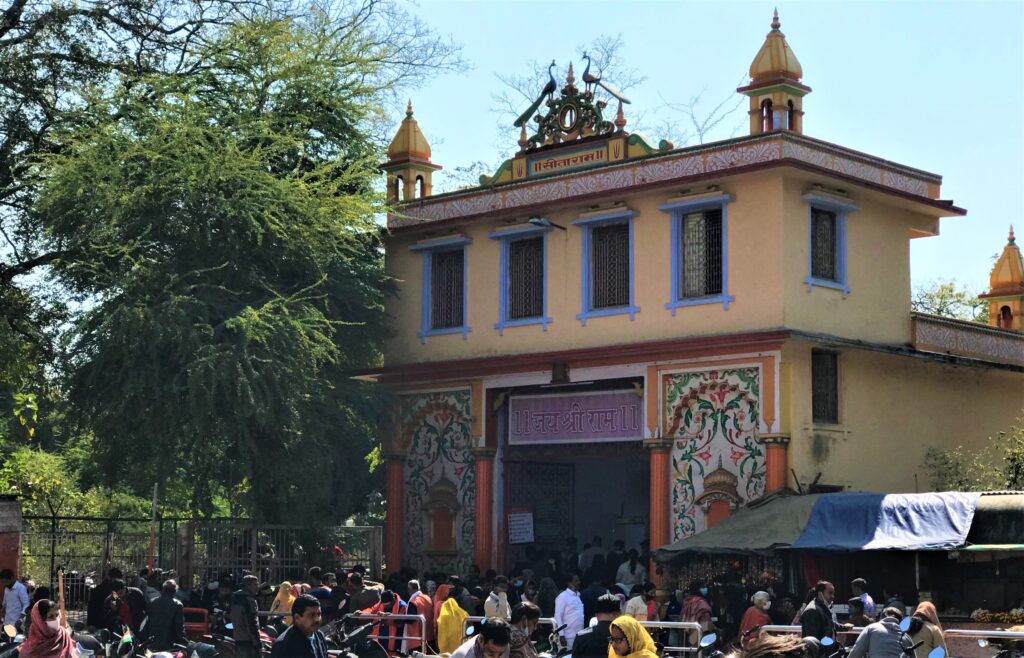
The footpath, or gully, leading to the temple from the main road was so narrow that it could easily confuse any first-time visitor. But after asking around, I was told that this lane is actually part of the main temple approach and is known as Viswanath Gully. Compared to some famous temples elsewhere, the absence of dalals or middlemen—who usually approach devotees offering faster darshan or quick pooja arrangements for a few hundred rupees—was a pleasant surprise, especially considering how important this temple is and how many devotees visit every day.
The shopkeepers on both sides of the gully, selling pooja items, were extremely kind and humble. They also safely kept devotees’ shoes, mobile phones, and cameras—since none of these are allowed inside the temple—even if one didn’t buy pooja materials from them.
There was a long queue, as expected, and many people were trying to push forward for a quicker darshan. But none of that really mattered once we stepped into that divine atmosphere, filled with the sound of Har Har Mahadev chants rising from many voices and transforming the surroundings completely.
It was crowded—almost congested—while waiting in the queue, but the moment we entered the temple, no one seemed to be in a hurry. Everyone allowed others to pray peacefully before the idol and to receive the pooja offerings without any rush.
The divine air within the small temple premises, which still felt congested even after the darshan of Kashi Viswanath, made me want to stay a little longer to absorb the spiritual energy flowing through the chants of Lord Shiva, the prayers, and the fumes of agarbatti and oil lamps. Every minute spent in this holy place—believed to be a favourite of Lord Shiva and part of a temple complex built centuries ago—felt worth all the effort it took to have this darshan without any trouble.
The age of the structure was evident from the black stone pillars, the small sanctum that could accommodate only one or two priests, and the very limited space around the temple. Yet the experience after the darshan, and simply standing within the temple premises where divine slokas continued to fill the air, brought immense satisfaction—as if I had fulfilled a long-pending dream for my mother.
Many small idols associated with the main temple were also present inside the complex, which is quite normal. But the well-known Gyan Vapi, or the “wisdom well,” is famous for a different reason. According to history, the main Jyotirlinga of Lord Shiva was protected inside this well during the destruction carried out during Aurangzeb’s invasion in this area.
Being in this spiritual world of a different kind—one that only a few fortunate devotees may get to experience in their lifetime—the devotional energy emanating from the Lord Shiva idol and the shrine felt like a truly special moment for everyone.
The Divine View and a Personal Fulfilment
Once outside the temple, another glorious sight awaited me as I looked at the exterior of the temple and its surroundings. Since the priority that morning was to complete the visit to this holy and historically significant place—believed to be blessed with the presence of Lord Shiva for centuries—all other thoughts were kept aside until the darshan and prayers were over.
A quick look at the temple from the riverbank came as a pleasant surprise. The majesty of the structure, along with the view of the river flowing in front of it, created a truly memorable scene. The top portion of the temple was decorated with gold plates donated by Maharaja Ranjit Singh. A small spire, or chatra, stood at the very top, and there is a belief that any wish made immediately after looking at this chatra will be fulfilled by the Almighty.
Never sure whether she meant it seriously or was just being casual, my mother often said that she wanted to go to Kashi to offer prayers to Lord Shiva and, if possible, take a dip in the River Ganga. I was finally able to fulfil that wish for her, and I can only hope that my parents’ souls are looking down from heaven, seeing that their loving son has done it.
Kashi - A City of a Hundred Ghats
There were many other temples nearby, most of them dedicated to Lord Shiva under different names such as Mrityunjay Mahadev Mandir, New Vishwanath Mandir (Birla Mandir), Shri Tilbhandeshwar Mahadev Mandir, Ratneshwar Mahadev Temple, and others. Since I had already visited the most revered one in the city, I postponed the rest for my next trip (though I’m not sure whether that will ever happen) due to the shortage of time, and moved on to the next major attraction—the Ghats.
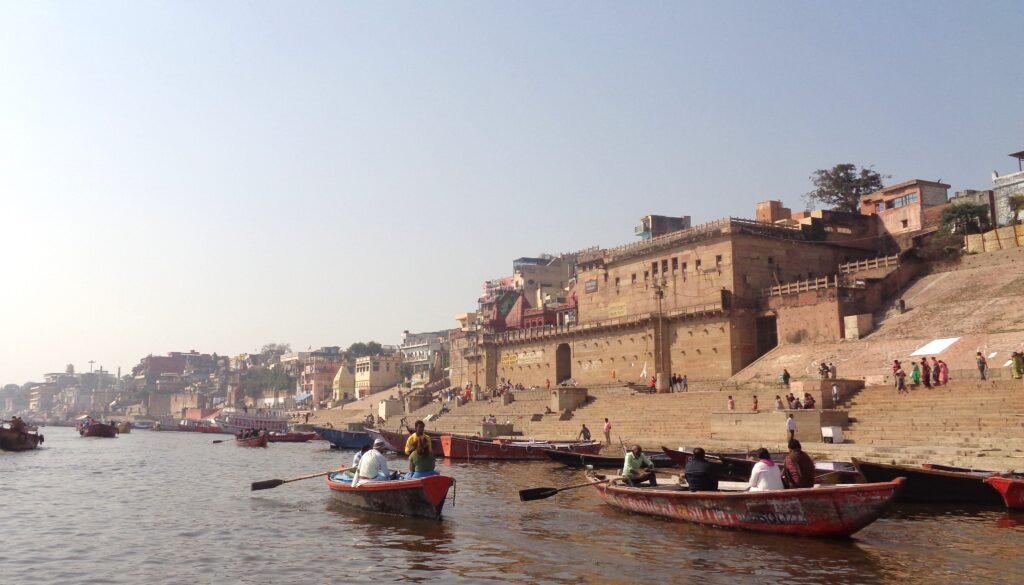
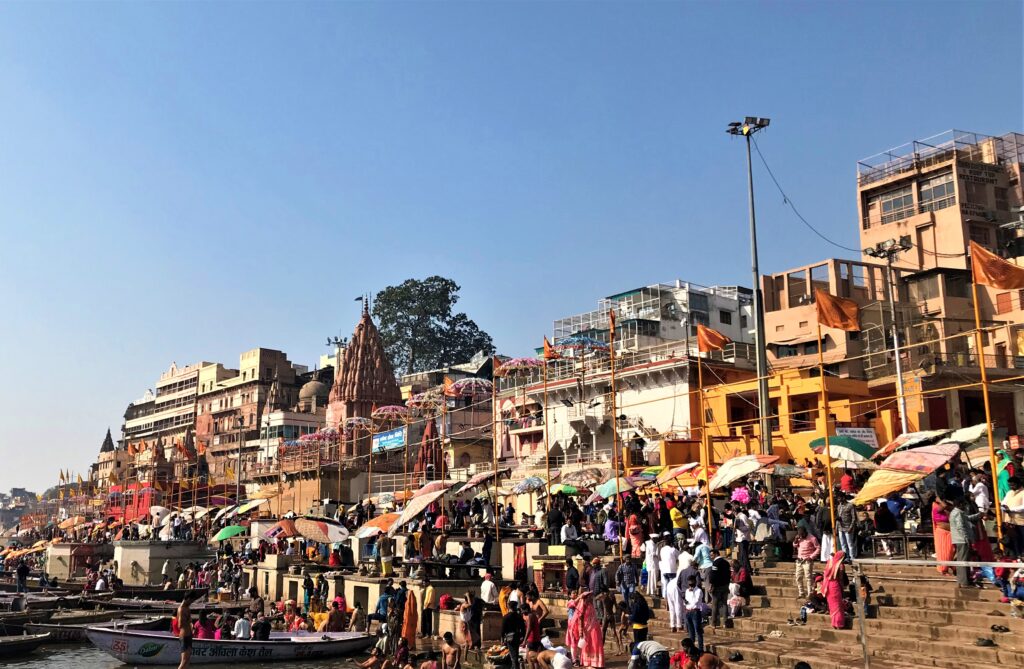
Ghats in Varanasi literally refer to the steps along the riverbanks that lead down to the holy Ganga. While having snacks and tea after the darshan, some locals told me that there are almost 100 ghats in Varanasi. The famous ones include Dashashwamedh, Harishchandra, Assi, Manikarnika, Scindia, and Man Mandir Ghat.
Contrary to my earlier belief that ghats are mainly cremation areas, I learned that only a few serve that purpose. Most of the ghats are primarily used for pooja and various religious rituals.
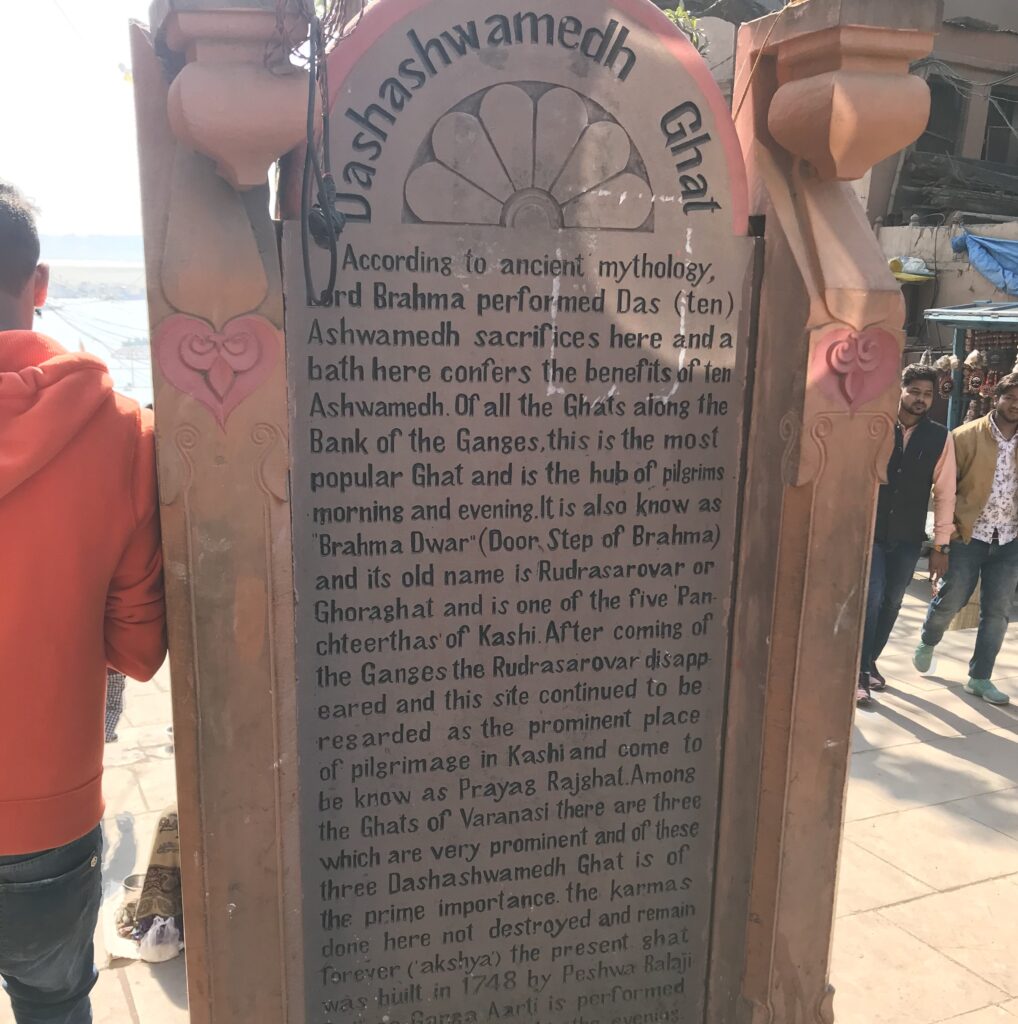
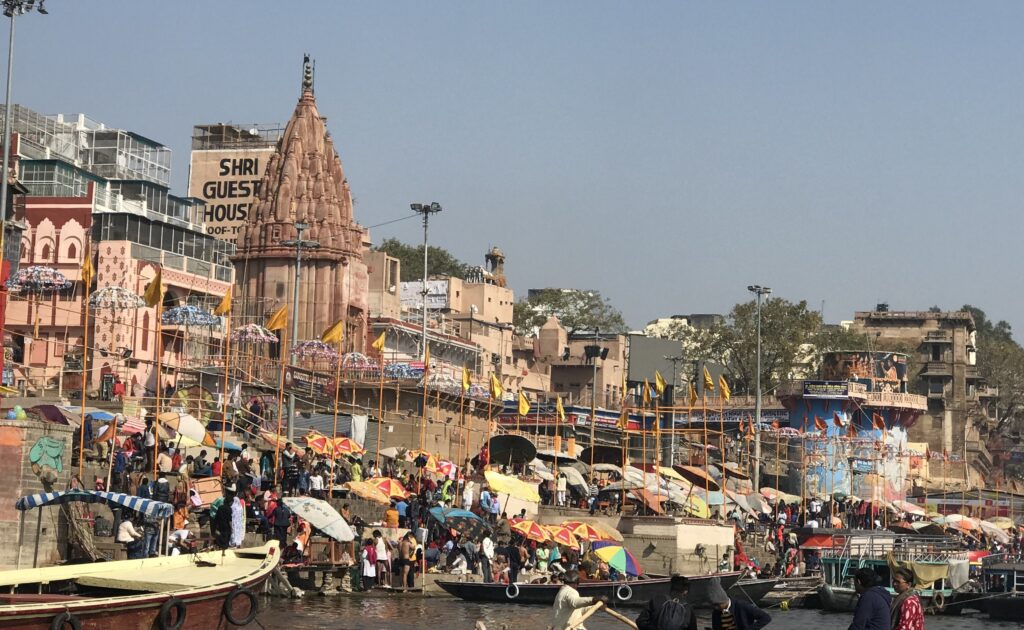
I went to the well-known Dashashwamedh Ghat first, which is located very close to the Vishwanath Temple. The beautiful sight of the river, along with the riverbank lined with neatly built steps where hundreds of locals and visitors gather every day, was another moment to cherish. Many priests were present, and some were busy performing poojas for people who had come to offer moksha to their departed loved ones or to immerse their ashes after the rituals, as per Hindu customs.
Life and Death Along the River
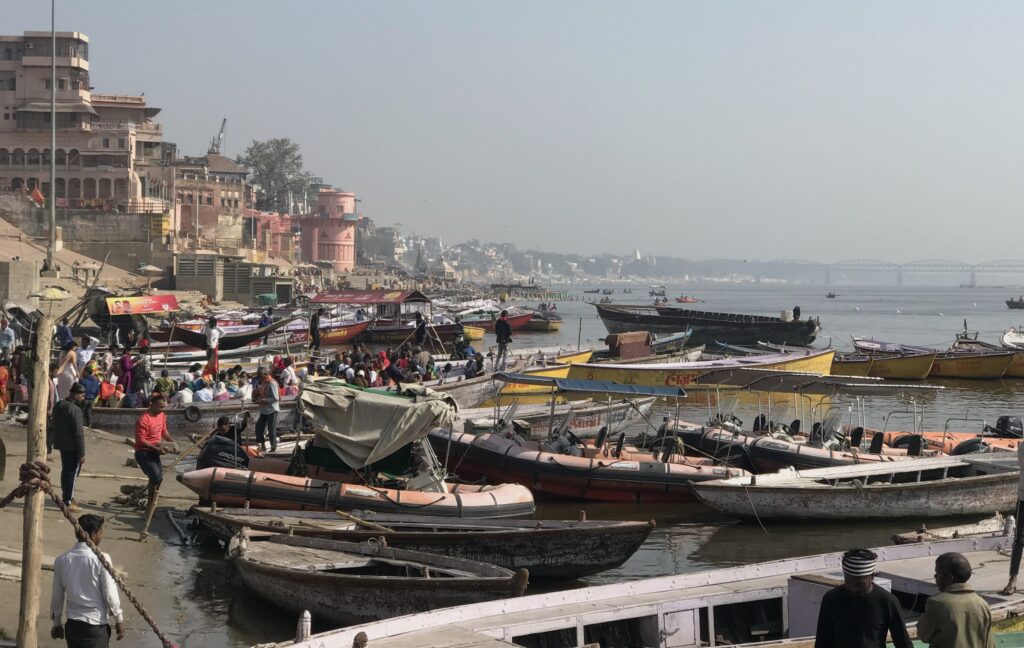
Walking along the ghats is another experience—almost like a unique exercise—for any traveller. Those who want to immerse themselves more deeply in the ghat atmosphere can take a boat ride from Dashashwamedh Ghat, where the boats usually make a loop along the river, offering views of many different ghats.
But unfortunately, the river didn’t seem to have enough water that day, so a boat ride didn’t look very appealing. A few boats were visible in the distance, but none carried visitors—only elderly locals rowing for their daily earnings. Overall, the entire scene carried a sense of stillness, reflecting the absence of liveliness that one would normally expect here.
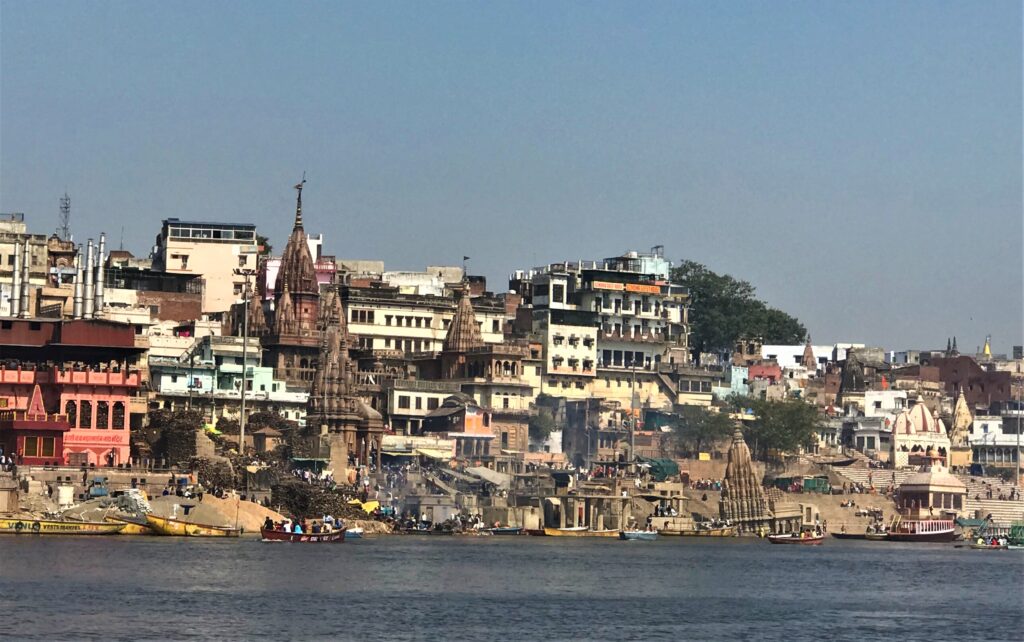
Somewhere deep within, I wished I could witness some of the rituals related to cremation, though I struggled to justify the thought of watching someone’s final moments on earth. Manikarnika Ghat — where, as per mythology, Sati Devi’s ear ornaments fell while Lord Shiva carried her lifeless body toward the Himalayas — is the most prominent cremation site, also known as the Burning Ghat. Several priests were seen performing rituals, with people gathered around for the final rites of their loved ones. It was a painfully emotional scene, and I quickly lost interest; after a brief, casual look, I walked away almost immediately.
The Missed Aarti and a Promise to Return
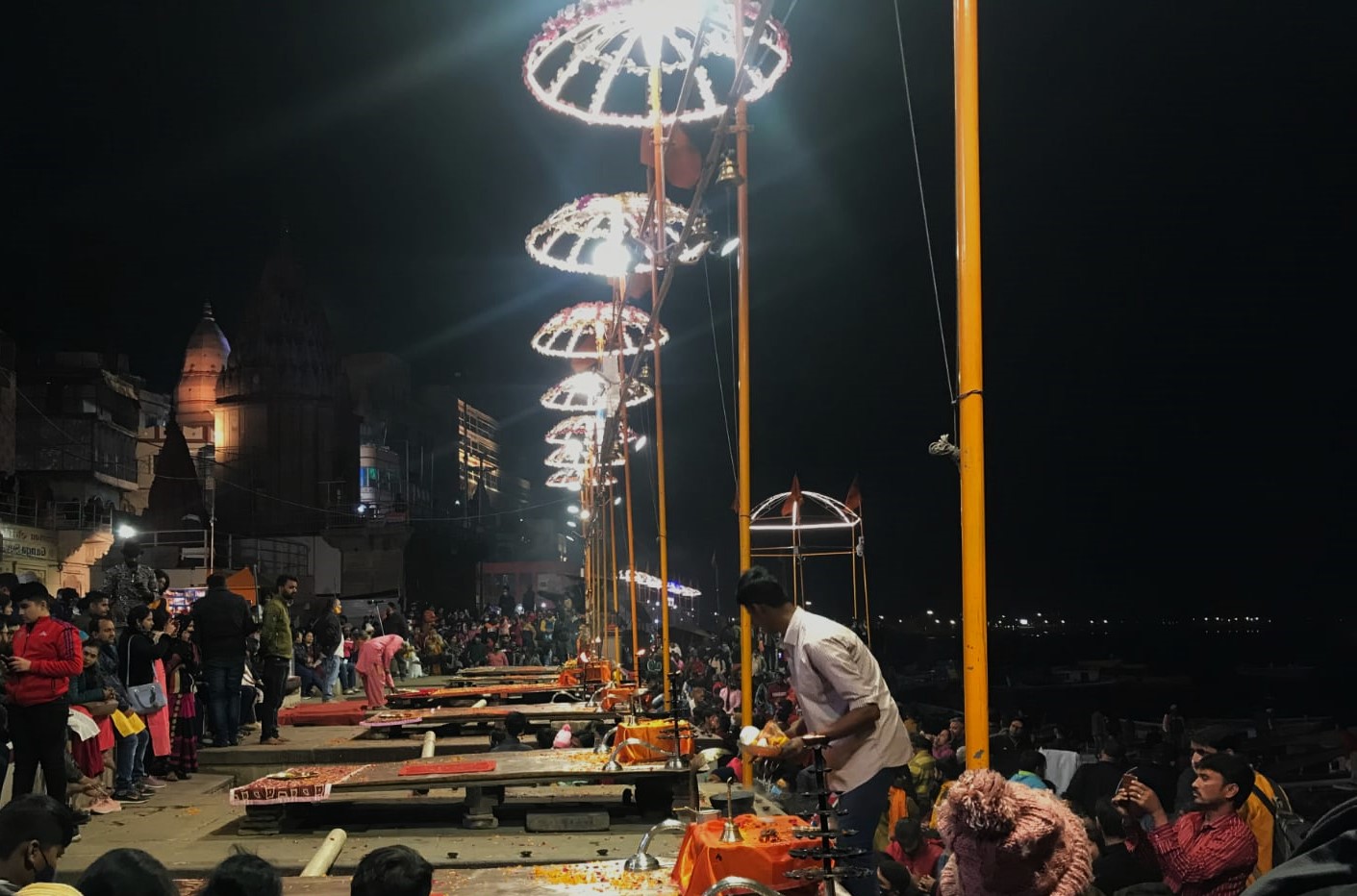
Another attraction here was the evening Aarti conducted at Dashashwamedh Ghat, just as the sun is about to finish its job for the day. While having a casual chat at a local shop, some locals were more than eager to give a running-commentary style explanation of how the Aarti looks and feels. Unfortunately, my return train time didn’t allow me to stay till evening to witness it, so it automatically moved to my “next-trip list,” if that ever happens. The evening Aarti is quite famous, performed to worship the river Ganga, which is revered as a Goddess.
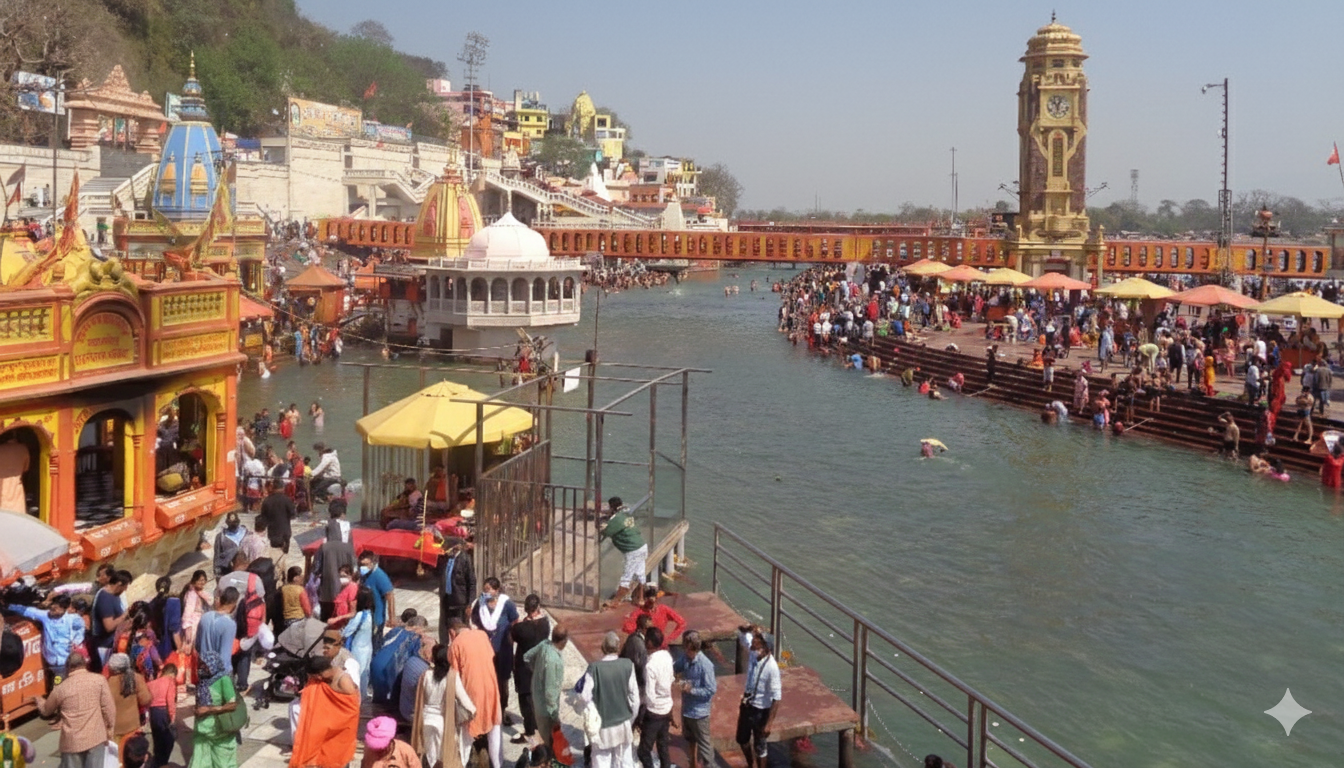
Ganga Aarti is a 45-minute pooja offered to the river every day. It is also conducted in Haridwar and Rishikesh, where the same river holds a lion’s share of significance as a Hindu religious place. A large number of people, including foreign nationals, usually throng the ghats to witness this unique style of pooja, which creates a festival-like atmosphere. But sadly, due to improper planning, it wasn’t possible for me to stay till late evening to witness this one-of-a-kind ritual. I was forced to say goodbye to Varanasi, promising myself that I would return someday to complete the missing items in the itinerary of this trip.
If you want to experience how Kashi feels after the new Kashi Vishwanath Corridor was completed, then click here.
Continue the journey along the sacred Ganga — Click Here for my Haridwar travel experience.
To know more about the Kashi Viswanath Temple - Click here for the official page
Note: All the pictures in this post are from my second and third trips to Kashi, as my first visit happened during a time when mobile photography was neither common nor clear. Back then, it never even crossed my mind that one day I would have a website of my own — or that I’d be writing blogs about the places I travelled to
TRAVEL INFORMATION
Location
Varanasi (also known as Kashi or Banaras) is situated on the banks of the River Ganga in the southeastern part of Uttar Pradesh, India. It is about 320 km from Lucknow, 220 km from Prayagraj (Allahabad), and 800 km from Delhi. The city is one of the world’s oldest living cities and a major center for Hindu spirituality, culture, and pilgrimage.
How to Reach
- By Air:
The nearest airport is Lal Bahadur Shastri International Airport (VNS), located about 25 km from the city center. It has regular flights connecting Delhi, Mumbai, Kolkata, Bengaluru, Chennai, and other major cities. - By Train:
Varanasi is well-connected by rail with major Indian cities. The main stations are Varanasi Junction (BSB) and Banaras Railway Station (BSBS). Several superfast and express trains operate daily. - By Road:
National Highways NH-19 and NH-31 connect Varanasi with Delhi, Lucknow, Patna, and Kolkata. Regular UP Roadways and private buses operate, and taxis are easily available. - Local Transport:
Auto-rickshaws, cycle rickshaws, and e-rickshaws are the most common local transport. Boats can be hired for sightseeing along the ghats.
Best Time to Visit
- October to March is the most pleasant period to visit, with cool weather ideal for temple visits, boat rides, and attending the Ganga Aarti.
- April to June can be hot and humid but less crowded.
- The monsoon season (July to September) brings a different charm, with a lush green backdrop and high river levels, although some ghats may be submerged.
If you wish to witness the famous Ganga Mahotsav or Dev Deepawali, plan your visit around November, when Varanasi glows with thousands of lamps along the ghats.
Travel Tips & Stay Options
- Budget Stays: Guesthouses and dharmshalas near Dashashwamedh Ghat and Assi Ghat offer basic yet clean accommodation for pilgrims and solo travellers.
- Mid-Range Hotels: Options like Hotel Alka, Ganpati Guest House, or Dwivedi Hotels provide comfortable rooms with Ganga views and easy access to temples.
- Luxury Stays: For those seeking comfort with heritage, BrijRama Palace, Taj Ganges, and Radisson Hotel Varanasi combine modern luxury with traditional charm.
Tip: Attend the early morning Subah-e-Banaras at Assi Ghat or the evening Ganga Aarti at Dashashwamedh Ghat for an unforgettable spiritual experience.
The way you capture Varanasi’s spirit makes me feel like im walking along those ghats myself—hearing the temple bells, watching the sunrise, feeling that quiet energy. I love how it’s not just about places but emotions — that blend of faith, peace, and timelessness. Even the small details like missing the evening aarti or noticing the smaller temples make it feel so real. Beautifully written and deeply reflective—feels like a soulful journey more than just travel writing.
As someone who lives in North India and often visits Kashi, I still got to learn many new things from this… Btw the Hanuman temple is popularly known as Sankat Mochan Mandir.
You’ve got great travel writing skills. Keep writing… Good vibes to you!!